Pages

Showing posts with label Scotland. Show all posts

Sunday, September 4, 2011

A close encounter of the Puffin kind..

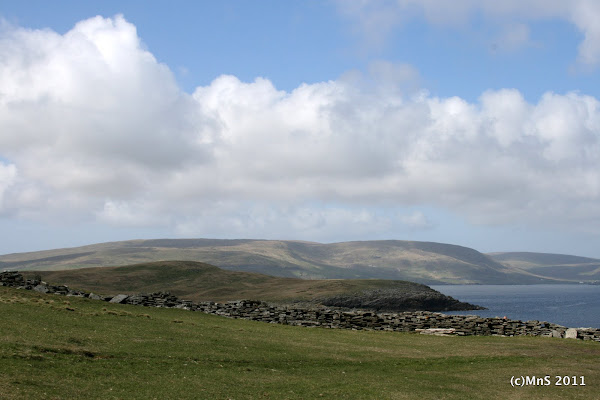
We are on our way to see Shetlends showiest inhabitants.. yes I said showiest, white face, black eyes, orange feet, the entire deal. Am super excited. The morning air is cool. The sun is out and theres not a cloud in sight. Samburgh Head is the Southern most tip of the mainland.

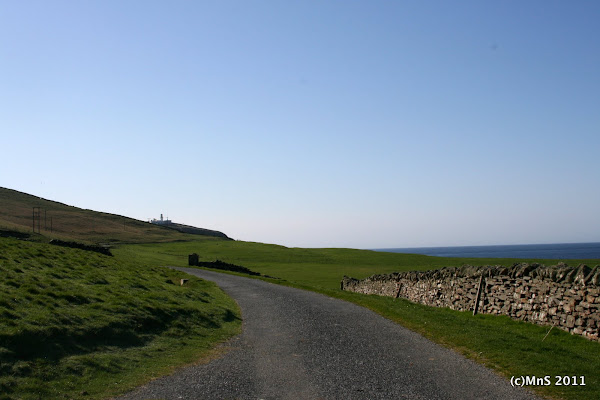
Winding our way to Samburgh Head..
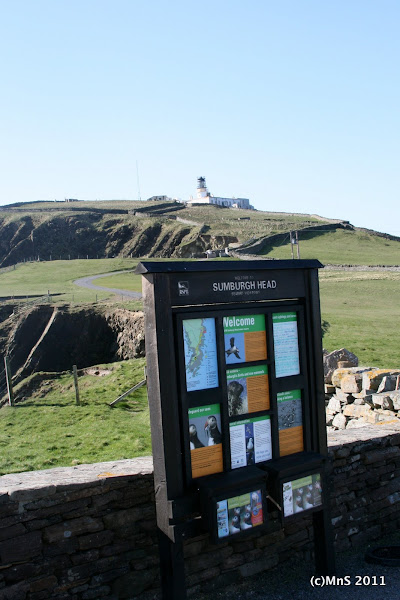
In a distance we see a lighthouse, the first that was built in Shetlands. That's not its only claim to fame as we were to discover. It was built by Robert Louis Stevenson who accompanied Sir Walter Scott to Shetlands in the 1814, a journey which made itself into the pages of his book 'The Pirate'. We park and walk up. At first we see nothing. A Fulmar sits totally indifferent to our presence.
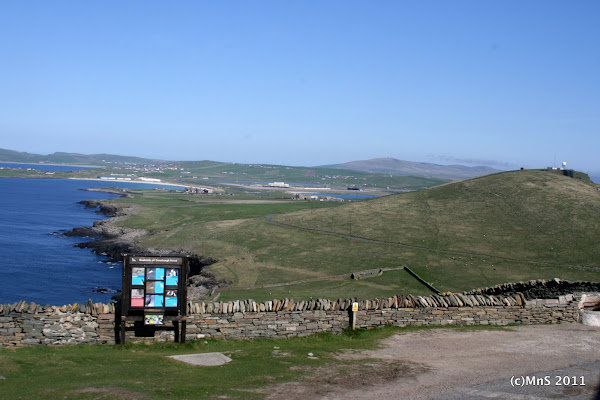
Samburgh Head, with the lighthouse built by Robert Louis Stevenson in the background

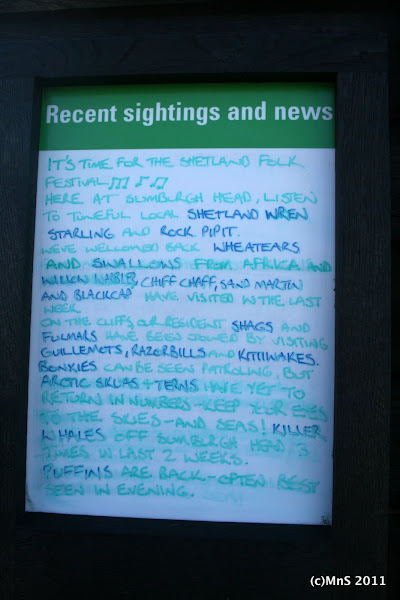
Recent Sightings..
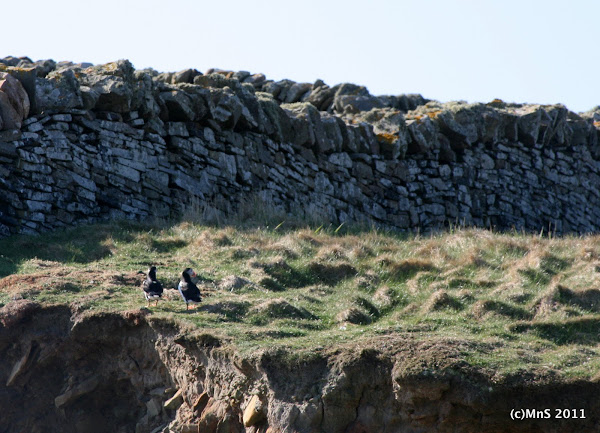
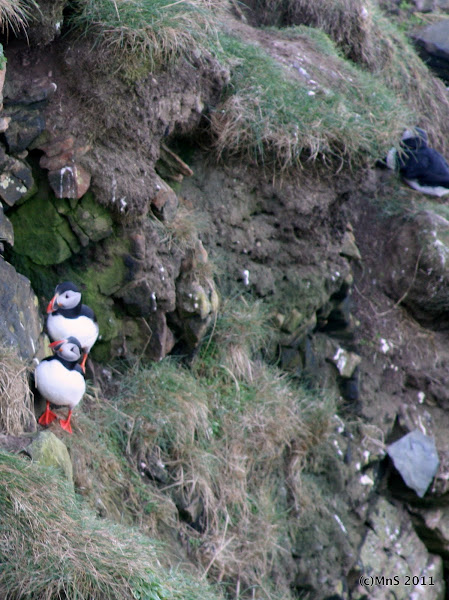
We walk a little further and peek over a wall. And then we see them black and white specks in a distance. I cant get good enough pictures even with my full zoom. They are incredibly cute birds.
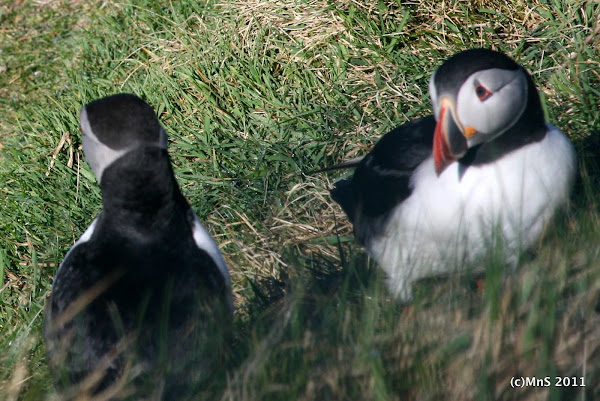
Puffins.. The first ones we spotted :)..

Two to a pod..
I read that most seabirds are loyal, pairing for life and staying faithful to their partners.And so most of the return to the same nests year after year.  Puffins spend the winter out at sea and when summer comes romance is in the air. Happy reunions marked are by rubbing their beautiful orange bills and they are back together again. Their size can be deceiving , and they have powerful feet and beaks which helps them carve out little homes along the cliffs. They nest in burrows and are locally called the 'Tammy Norries'.   
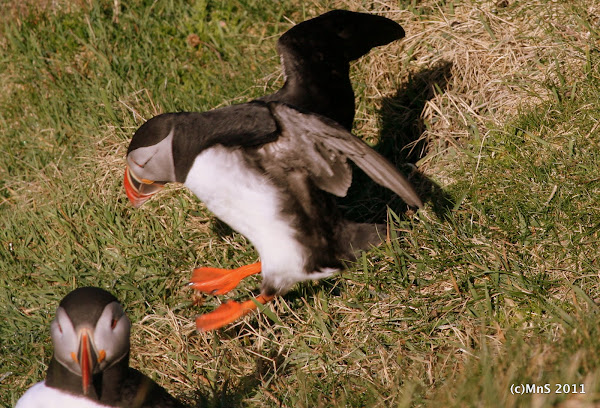
Check out my Orange feet...
They are extremely pretty birds. We walk up and we see more puffins. This time a lot closer. We stay out quiet , so that no noise scares these beautiful little things away. Every now and then one of them decides to fly down into the water below. they look more like butterflies and they might not compare very well to the graceful gliding movements of the fulmars , skuas and gulls. But what they lack in flight they make up for in plumage. Undoubtedly the most photogenic among all the birds we have seen here.
Oops...Lost my footing.. 


We walk up to the lighthouse and spend some time looking at things there. The views from up here are stellar. Blue seas and clear skies. Samburgh head is the best place to spot Orcas they say. But we are in the wrong season for such sighting. We shall come here again.. :)


We leave Samburgh head waving goodbye to the bright visions of orange , black and white.

Meena 

Saturday, August 27, 2011

Around Noss..


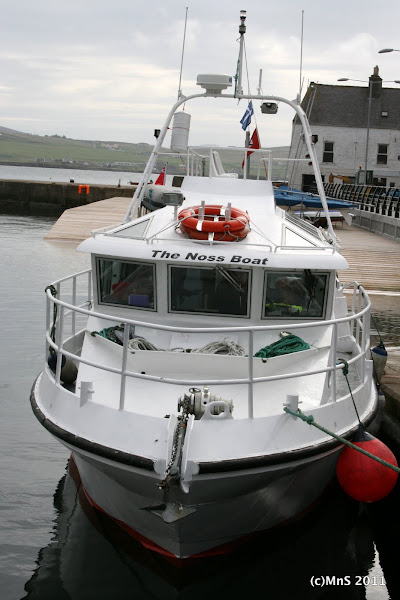
Today we see Noss. I am excited all morning. We leave Lerwick on a boat, much smaller than the one we took to Mousa. This is going to be a very different experience. Unlike Mousa we wont get to cover the island on foot. Instead we have opted to see it by sea. Noss is a small island east of Lerwick, a national reserve where over 100,000 pairs of seabirds of various kinds come to nest.
To Noss...
To get to Noss we first must sail around the beautiful island of Bressay, much larger than Noss but wearing the same red sandstones of the smaller island to its east. Our hosts are incredibly friendly and enormously knowledgeable in the sea life that abounds here. Am all ears. We keep an eye out for seals.  Summer is quiet not here and it is unlikely we would sight any whales I am told. Although the captain says of the one time when an Orca dived under the boat before pulling up along side them . It gives me goose bumps. I think I would cry if I see a whale. Those enormous beautiful creatures of the ocean.
The sky is the limit...
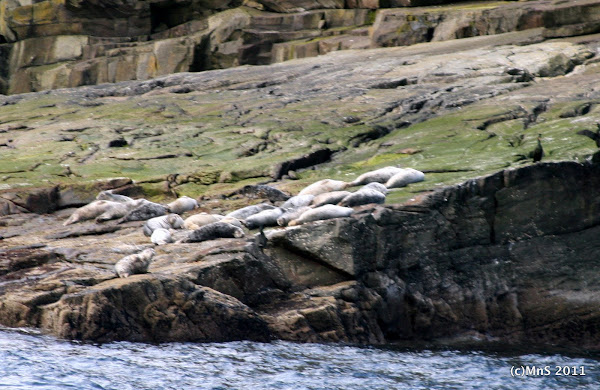
Birds swoop ahead. And then we sight our first seals. Basking in the sun. Seals can be stupid sometimes our captain says. They feel most secure in the water. So if we get too close and they feel threatened they would not hesitate to jump into the blue sea. Well that works well if its a ship coming after you. But they do the same if they sight a whale, suicide almost!..
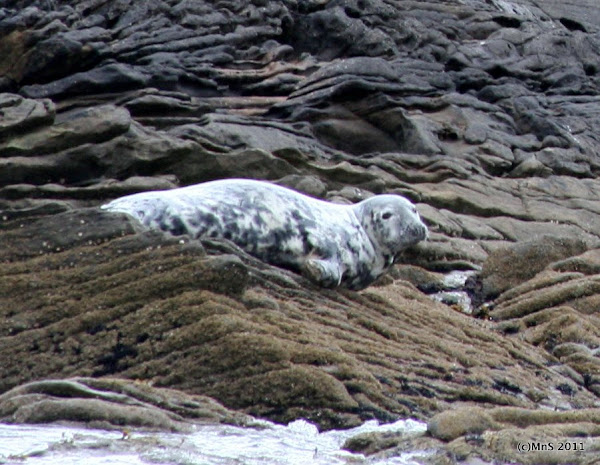
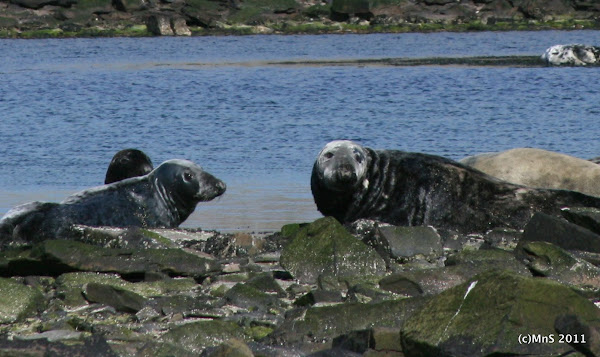
I ask about the difference between the Grey and Common seals, two of the most common seal mammals here. Others include Otters. The common names are rather misleading cause Common seals are Grey and Grey seals are quite common :). What makes the two species can be told apart by the shape of their snout. The common seal has a more rounded snout while the grey seal has a more protruding one...
Common seals..
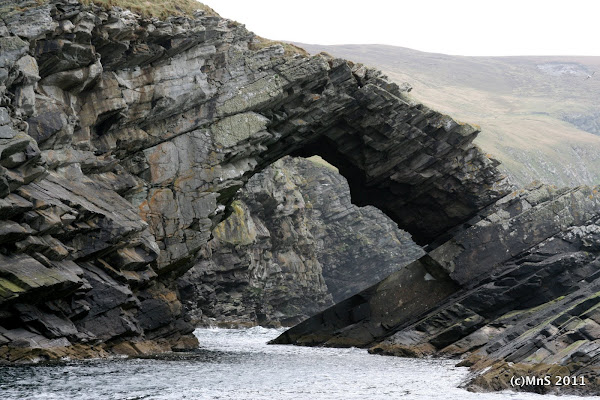
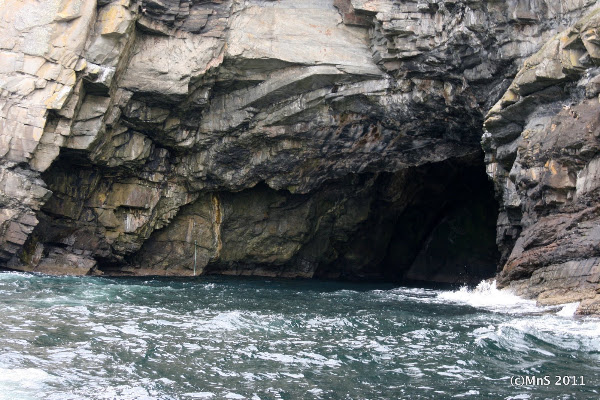
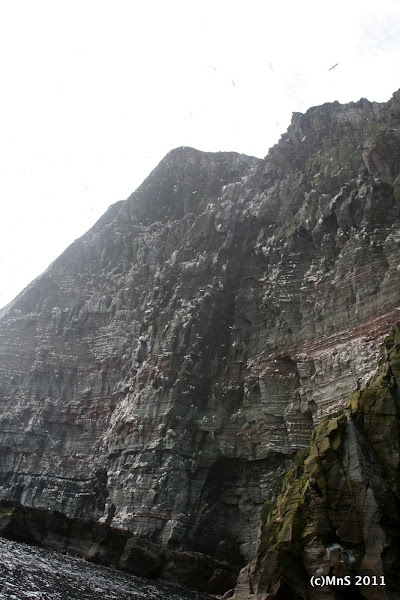
The cliffs are beautiful. Dark brown , drenched in the blue waters and reaching up to the skies. The sea can be quiet an artists, sculpting, etching, chipping away and all around we see the most spectacular rock formations. We sail into a cave.
Arch shaped rock formation..
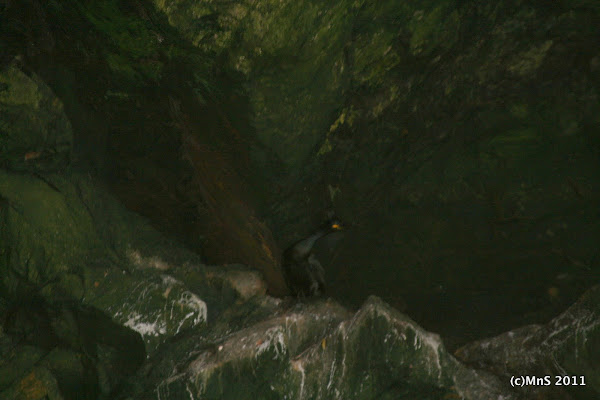
I peer into the direction of the captain's pointed finger, a gleaming eye catches my attention. And there in the cover of darkness we see Shags. They nest here in the cover of darkness. The handout I have from the RSPB says of them , Shangs are goose-sized, dark, long-necked birds similar to cormorants but smaller. In the breeding season, adults develop a dark glossy green plumage and prominent crest. 
Sailing into a cave.. Shags nest inside the rocks here 
All around we can hear the ocean roar. The waves crash against the cave. We stand here a while and we sail out. The cave is beautiful from a distance.
Sailing out of it..
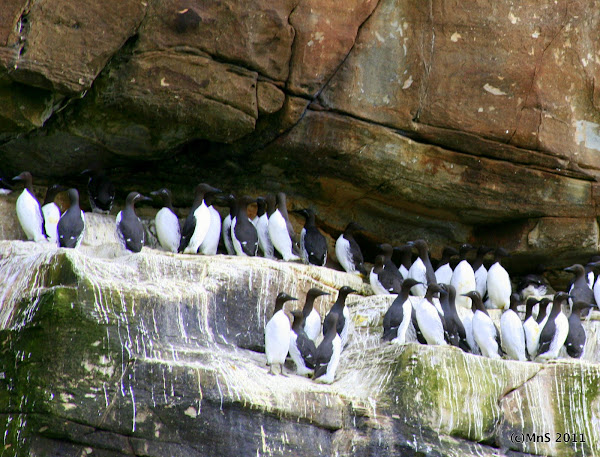
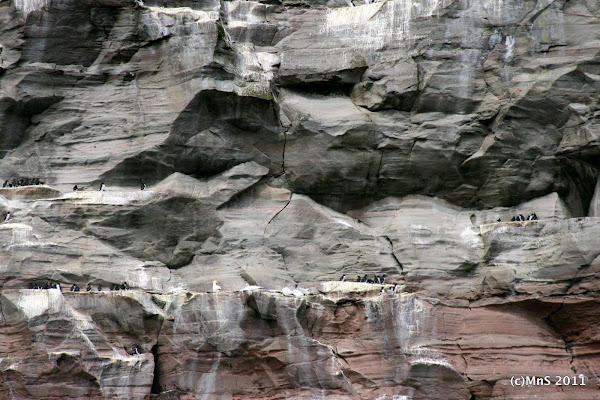
We sail past another rocky ledge and standing up on them are little birds in pigeon suits. They really do look like miniature penguins. Guillemots , our hostess says. They nest here in colonies on the cliffs. They are strikingly beautiful. There are couple of species of Guillemots and they can be told apart by certain distinctive features. The black Guillemots have orange feet (How cool is that :)). But the ones we are seeing bespectacled with white rings round the eyes are the common ones. Theirs eggs are pear shaped , to prevent them from rolling off the cliff's edge.
Guillemots.. standing up they look like little penguins
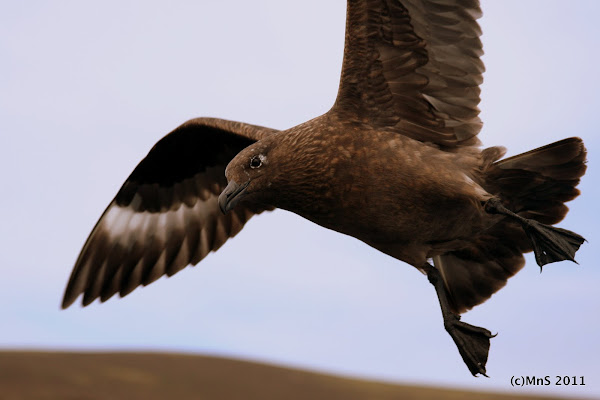
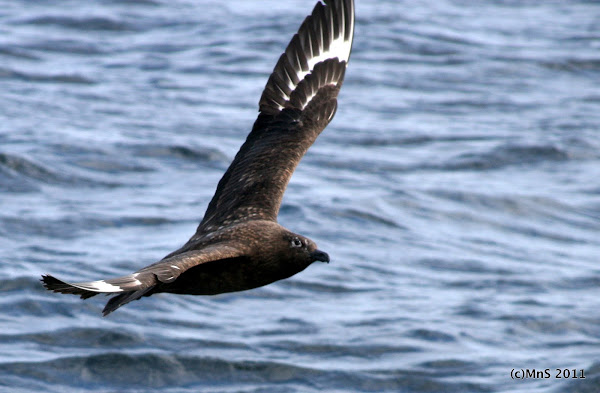
Its time for some coffee. And as the kettle boils and the smell wafts through the cool sea air, sharp as a knife others get wind and circle ahead. And then we see the top predator here. The great skua circles overhead. This is a seagull evolving into an eagle, The captain explains. Its a beautiful bird, strong and powerful. Our host holds a biscuit ahead and the skua circles above waiting for the right moment to strike. And then in one swift graceful movement the biscuit is gone. The are known to kill smaller birds like Puffins and they steal food off others forcing them to give up their prey(Kleptoparasitism)
The great skua circling above our boat..
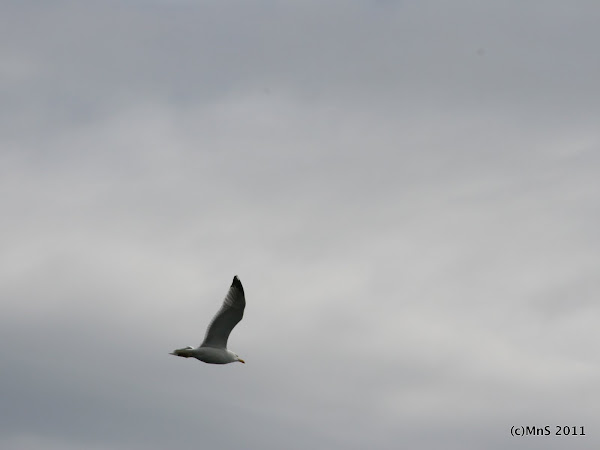
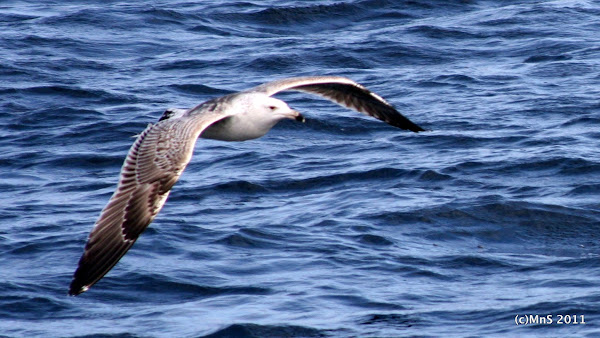
I get a few great shots. Others join the party. A beautiful gull swoops low, my lens is in full zoom and I feel like hes gotten too close to comfort and jolt back only to realize hes a little way off :).
..Circles again and again..

A Gull swoops low..
We see more seals. The sun is out and they seem to be enjoying laying out on their backs. Living the life as they say.
More Seals..
We are closing in on Noss. The name of the island comes form the Norse word - Nose. Unlike Mousa this island is inhabited. Its being used for sheep farming , the perfect grazing ground - The sheep are left free , and they roam as they please , with restrictions being imposed only during lambing. In the 1870's this island was used as a breeding ground for the famous Shetland ponies. The island is dominated by the Skuas who nest inland, laying their eggs on the ground (as we saw in Mousa). Others are relegated to the cliffs.
Guillemots ..standing on the rocky ledges..
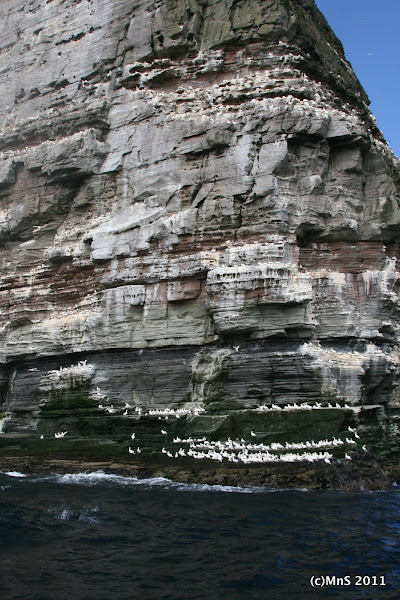
We spy more Guillemots. Seems like  a scene out of Jurassic park, with the cliffs looming large and the chorus of a thousand sea birds punctuating the cold air. They seem to effortlessly glide through the air. Truly poetry in motion! The sea and waves have conspired in the perfect way to build this astonishing feat of high rise living. Not even the skyscrapers of Shanghai are a favorable comparison. As with most things there is a hierarchy to the order of things here. Guillemots of which there are close to 45000 nesting pairs occupy the lower ledges.
The cliff comes alive with birds...
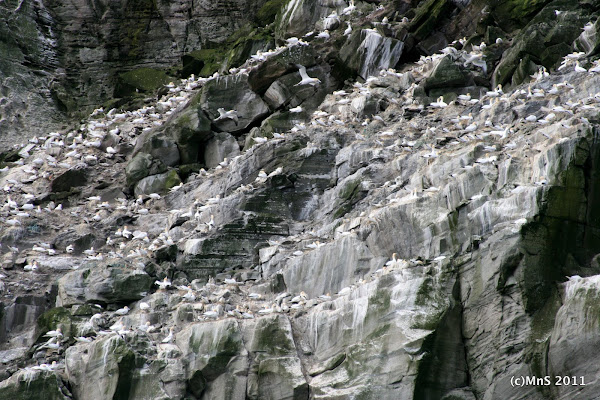
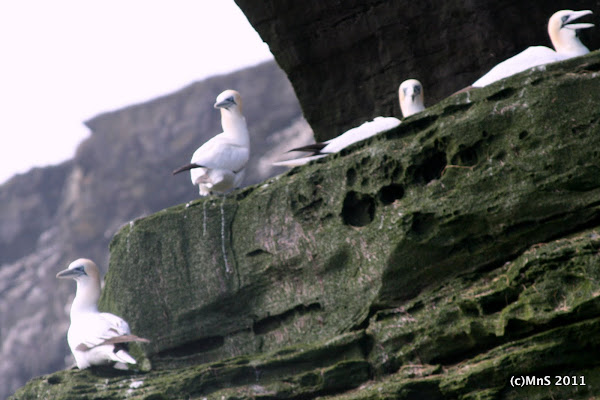
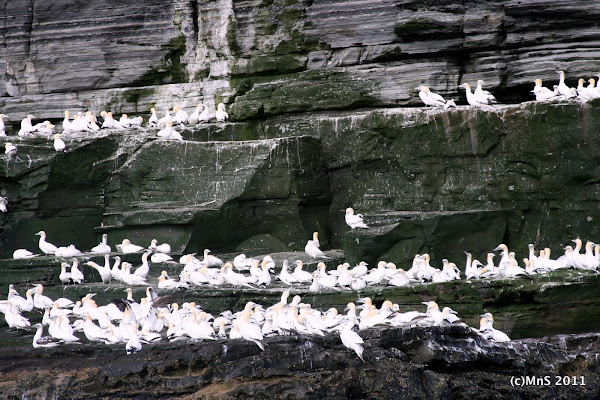
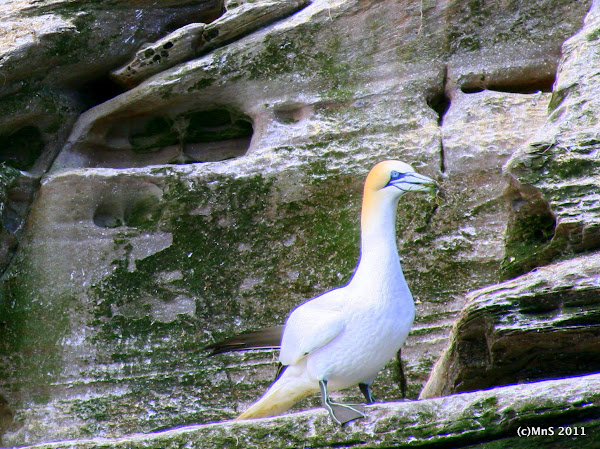
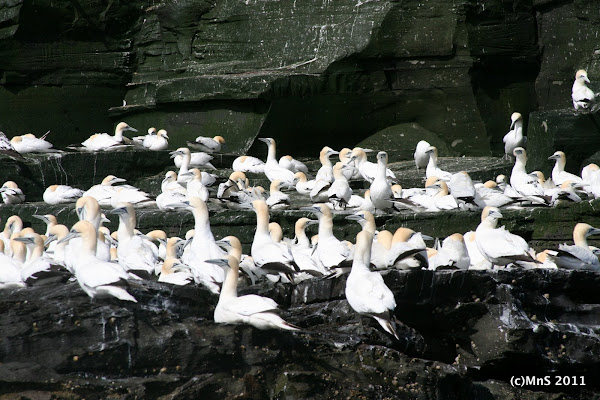
The higher cliffs are monopolized by the larger gannets. Their striking white and yellow forms make them easy to discern. They are everywhere. Our hostess explains, if you are a gannet and you go out to sea its never easy getting back home. How would you tell your mate apart from the rest? ..and so she goes on to explain how gannets read body language of the other to try and make out some order in all this chaos.
The chorus of a million seabirds chanting..
A gannet with its beak raised up towards the sky is telling its mate that it wants to be the one going out to sea.  Sometimes a stalemate might ensue , if both partners look skywards. And this would definitely require one of them to be more grounded if some resolution must be reached in the interest of the hungry chick :).
Gannets..

Gannet colonies..
The gannet colonies are beautiful. We see them repeatedly plunge into the sea and fly back. It requires a great deal of effort for a gannet to launch itself from the ocean into the air. We come by a bird sitting there , helpless..and out captain explains that this is mostly signs of a Gannets end. If unable to launch itself  it eventually dies in the open ocean.
A gannet surveys the sea ..
We cant get enough of these beautiful birds. This place is primeval
Preening those lovely feathers..

Rituals of love..

Gannet colony..

Cliffs of seabirds,,
After spending some time here , we head back to Lerwick.
Getting back..
Noss has been an incredible Avian adventure.  I read in the RSPB booklet about how climate change is affecting our seas, of how fulmars and albatrosses die from accidentally eating plastic and I feel incredibly sad. We do share this planet with so many others. But most times they seem to be at the receiving end of this arrangement. Its so easy to reduce our consumption of plastic. Maybe its even as simple as carrying your own bag to buy groceries. I came away with a resolve that I would do everything in my power to spread the word so that we have many more years of incredible living in our might blue planet :).

Saturday, August 6, 2011

Walking Mousa..


An early flight to Shetlands saw us land in this beautiful cluster of islands with three entire days of exploring at our disposal. The sight of the mighty blue ocean encircling the cliffs, vast expanse of blue skies , sun splashed grassy hilltops ; We drive through all of them and our cab driver tells us, The weather isn't this good all the time, you guys are lucky.. I love the Scottish accent. It is ever so cute.

We check in and explore the town a bit. We've read so much about this place and yet every step surpasses any expectations we might have had from hours of armchair travel. Its beautiful.
Our morning is to plan how we would make best use of the next three days. We are not lucky enough to get on the ferry to Samburgh head, but the afternoon ferry to Mousa is available. Thrilled to bits. The sounds of seagulls squeaking over food is a constant, as numerous as crows they seem to perfectly glide over the smooth blue skies wiping away any clouds that might have been in sight...
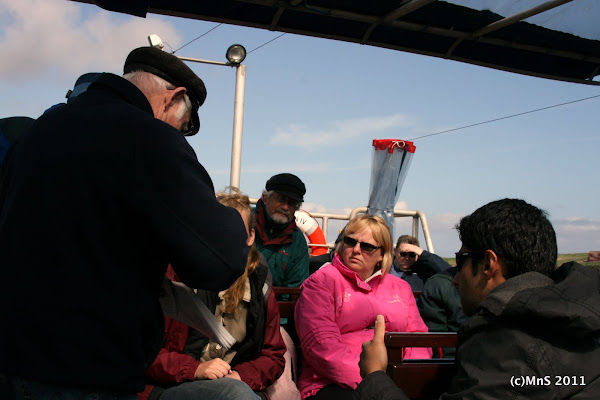
On the boat to Mousa..
Our little ferry leaves only in the afternoon. Our ride costs us 15£ per head. We would have 4 hours to walk the island. Lying off the east coast of Shetlands , we ride about 30 minutes from Lerwick before we can sight land. The island emerges into view, a brown line against the distant horizon . It is currently uninhabited we are told. But there was a time when this was a Norse settlement. The island itself is not very big; about a mile and a half in length and a mile in breadth.
As we step off our boats we are given maps; reminiscent of those given out during treasure hunts :)..
There are 7 points neatly marked out. We begin and walk along with the group. In a while everyone meanders off into their own private spaces. Just like any other journey a tour of an island is always a very personal thing.
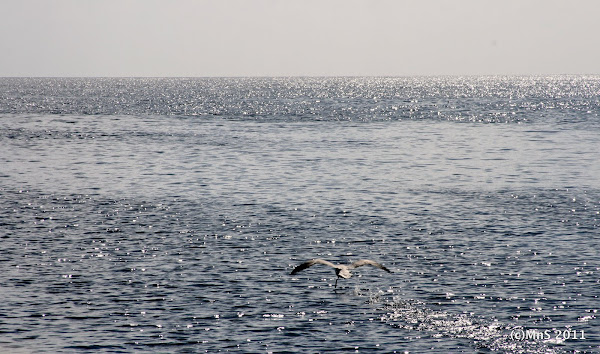
The world is my canvas..
We peek down from where we walk. The cliff is full of birds. Right below us cormorants hang their wings out to dry.  The Shetlands are home to millions of birds. The sky and water is alive with life.
Cormorants, sitting by the cliffs and hanging their wings out to dry..

Endless Blue..
The grass is soft. Our legs tire easily. Every step seems to sink into the soft ground beneath. Its not very good for the legs, S comments. In the very ancient Scandinavian 'Old Norse' tongue, Mousa would mean Moss island and this is probably why. The island is teeming with life. There are no trees as with most of Shetlands. But grass abounds. We are so close to the poles we realize; Almost at the Earth's end.
A Fulmar sits on a rocky ledge..
The rocks are spotted with yellow patches. Inch closer and its algae we realize. They look more like a splash of the gorgeous afternoon sun drying up on the huge wet rocks. Unbelievably beautiful.
Walking down Mousa.. 

As we walk on, the marking on the map become less understandable. We try to make sense of the turns we seem to take. We walk upto what looks like a rocky wall. Some of the others who got there ahead of us seem to be looking out in silence. We read the sign which says the spot is perfect to view Seals and Otters. We stand there for a while. Couple of Fulmars swoop ahead. They seem to be flying low. 
We probably are very close to their nesting grounds.  We are right in the middle of what is rightly their home and they will do everything they have to to defend it. Walking a little way beyond the wall we see why. We guessed right on this ocassion. We see the wall has fulmars sitting along its length  in different places. Their body language says 'Do not Disturb'..
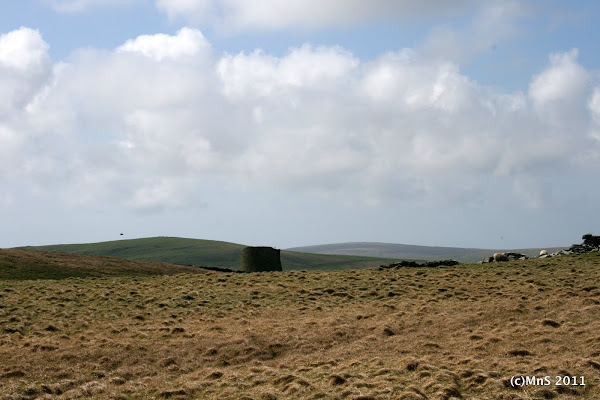
The Iron age  Broch in a distance
We walk on and a huge stone like structure looms on the horizon. This is Mousa's most famous inhabitant; A 2000 year old iron-age structure - 'The Mousa Broch'.  We walk upto this stone built castle and look up to see it towering 43 feet above us. We walk in. A comment on anything as old  as the Broch comes automatically prefixed with probably and so it goes that this was probably used in defense or maybe even as some sort of status symbol. Mentioned in old texts as a hideout for eloping lovers , there are 120 other such Brochs through the Shetlands.
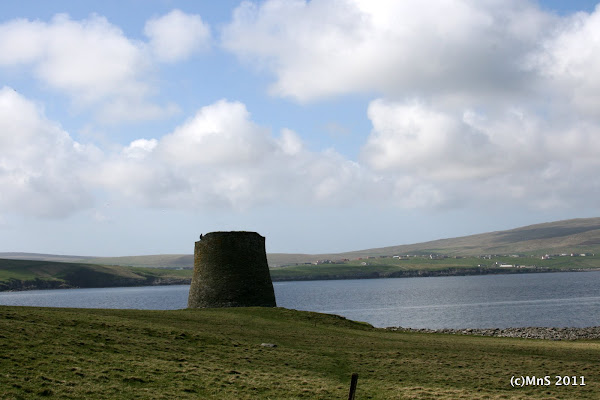
A closer look at the Broch..
Standing in a circular clearing , the walls tower over us. There are torch lights kept aside for those who want to explore. I am suddenly claustrophobic. We can hear signs of activity in these walls. This is where the smallest bird of the Shetlands, The Stormy Petrels come to nest. But to see them we have to visit by night as these tiny birds not much bigger than a sparrow are off to the feeding grounds by day. The Stormy Petrel , of which there are 10000 nesting pairs here in the islands, fly along the Arctic and look for Plankton on which they feed. The broch lays claim to being UK's biggest Bird Box!!
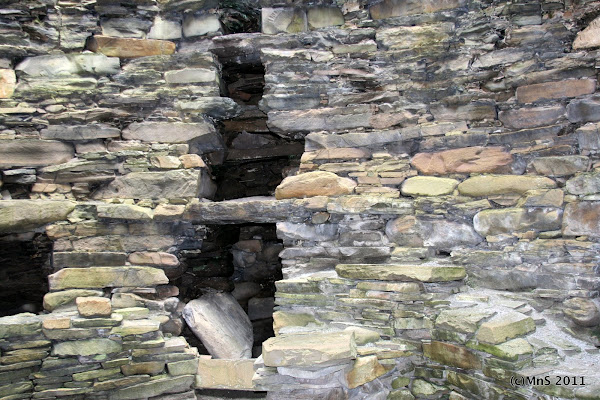
Inside the Broch..
We can climb to the very top, someone is already there before us so we wait our turn. But then we abandon the pursuit as the walls are too narrow.
Walking up..
We walk away looking back. The blue seas and the bluish sky makes for a beautiful setting. If there was a god he would have to be an artist, probably impressionist ;)
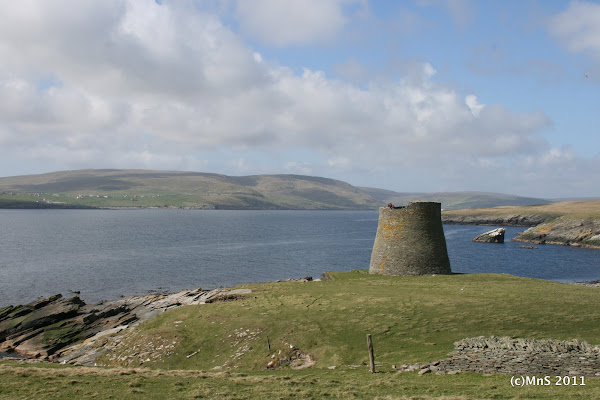
On the other side of the Broch..
We walk up a little higher. The grass gets thicker. Our senses perk up. Its amazing how even after millions of years of the human civilization living in cities we have not lost our instinct to survive. Our ears hear more clearly and our eyes catch sight of the slightest of movements. Suddenly two big brown birds emerge into view. They are sitting on the high ground. We did not know then, but we had come face to face with the 'Great Skua' or 'Bonxie' as it is more commonly called. They along with gulls and terns nest inland. Each pair could be guarding a nest with upto two eggs or chicks even and are known to dive bomb people who get too close. Everything about their aggressive body language tells us to run and in retrospect it was a little foolish to stop to take pictures. But in my defense I did capture the posturing male.
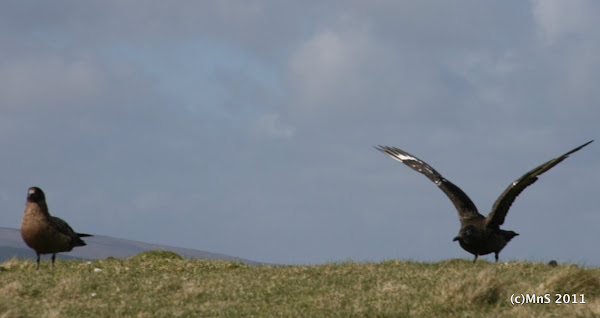
A  pair of Great Skuas...
We beat a hasty retreat and our map doesn't say much. We are lost we admit. We check how we are doing on time. We have a little over an hour to find our way back. Reconstructing scenarios of people lost on lonely islands I become a traveling companion's worst nightmare.
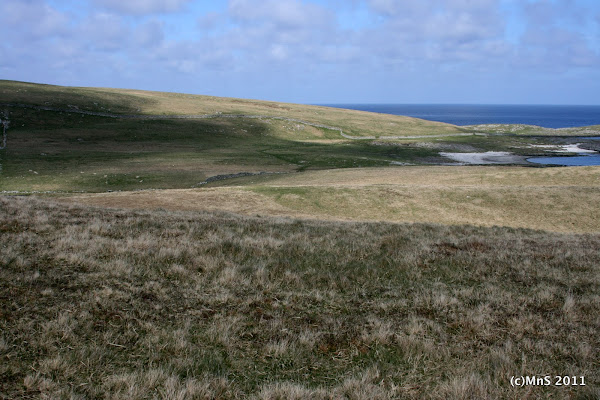
Evening glory..
We get to a point and realize we are inside the area where seals come to nest. In a distance we can see them. We stand quietly watching.
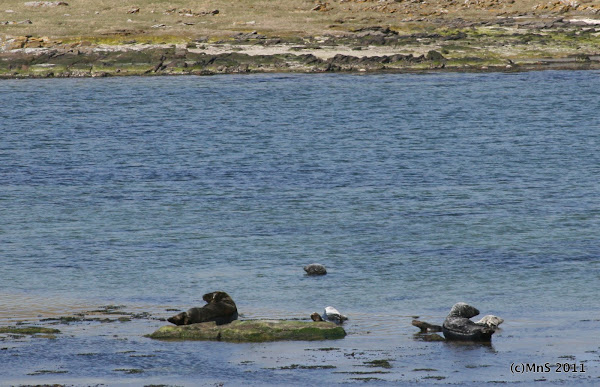
Seals in the wild..
The Shetlands are home to two kinds of seals - 'The Grey Seals' and 'Harbour Seals',  told apart by the shape of their snouts.  What looks like an inland pond we discover later is one of the largest nesting places for seals. We can see a few in a distance
The grey seal
I really need to zoom in. Its so beautiful, primeval even. There are no sounds except for an occasional bird calling out to another or screaming out its isolation to the skies.

The wind blows, the sun is  getting hot against my bare skin, my feet are grass tired and my partner is anxious. Reluctantly we walk. We are not sure if we we are on the right track but we know its time to find out. We see others walking back to the boat in a distance. Suddenly hungry we split an energy bar and gulp down the last bit of water we have left.
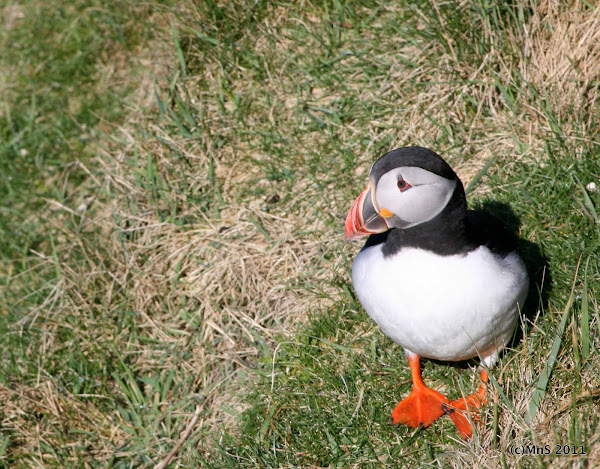
Puffin in a distance..

We take the boat back. That night we sleep , almost dreamless. We discuss it the next day over a hot steaming cup of tea...
Its probably more fresh air than we can take, S comments.. I have to smile! :)
Thursday, August 4, 2011

Three Days in Shetlands...

And so we were off. With Inverness behind us and on the road to Aberdeen , I read as much as I can about the Shetlands. This is what brought us to Scotland. It all started with a brilliant program on the BBC called 'The Shetland Diaries'. Even though vicarious, every episode brought with it a sense of wonder- Birds of every colour and WHALES!...
Unfortunately we don't have much time on our hands at Aberdeen. Its more a stop over.
We catch the first flight to Lerwick tomorrow... Here we come!!


Saturday, July 23, 2011

Ghosts of Culloden..


A friend once said of Culloden:
Even the birds don't chirp here...
--------------------------------------------------------------------------------------------------------------------------

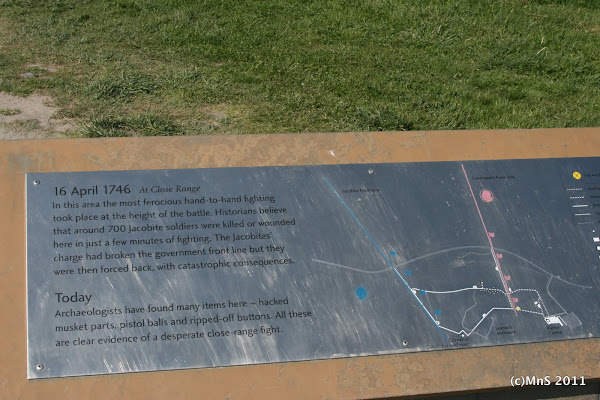
Remembered as one of the bloodiest battles between the English and the Scots, its only when we start reading the visual display at the Culloden center that we understand how loosely these definitions hold,  For there were many Scottish clans who fought for the English during the course of this battle. Bannockburn was a happy place, but Culloden is just sad, we feel it when we walked in and we feel it when we walk through the fields. Our audio guides attempt to recreate what happened  in these green fields of today, many many many years ago.

Culloden is important. It shaped history. Emotive,  as it is historically important , its hard to completely understand the events that lead to the moment of battle.  The visitor center is excellent. It reconstructs the battle as it were with accounts from both sides fighting. Along with it, dates and important events leading up to the bloody Apr 16th 1746 in Culloden, tell a tale of a struggle for power between the Jacobites and the English. A struggle that came at the cost of many lives and altered the course of history forever.


I Realize again how flawed my understanding of history is. Reading can sometimes make actual events simplistic without meaning to. Its easy to take sides, to judge is even easier...But to stand back and view everything, giving every story an equal ear is so incredibly hard.
Today the moors where we stand are a picture of peace, but the ground beneath holds the graves of hundreds of men. Is life ever worth giving , even for a war? I wonder .. And while I hold mine precious I respect those who give their lives in pursuit of something they deem higher than themselves.


It started with one king , who ruled two kingdoms under two names -  As James II he ruled over all England and Ireland and as James VII he ruled all Scotland. The Catholic King ,was seen as a threat to an increasingly protestant English elite who turned to his son-in-law William of Orange for help; And as always when there is a struggle for power people turn against one another, even your own blood.. More so your own blood! And so James was deposed and  replaced by his daughter Mary II and her husband William III both protestants.  James fled to France. The Jacobite uprising  sought to restore power to the Stuart Kings , the last of the lineage being the recently disposed James.
History unravels.. The thrill of seeing 'Madras' in a place far from home..
At that time , The kingdoms of Scotland, England and Ireland were divided over religion. The Jacobite uprising found sympathy with a Catholic population who felt largely discriminated against by the ruling Protestants; May of the Jacobites were protestants themselves. Clans were sharply divided and in the end there were a few who even fought on the side of the English.
The battlefield..
England had for a while been ruled by the Whigs, believers in Constitutional Monarchism wherein the powers of the king are not absolute and he serves as head of state within the framework of a constitution.
Going by what we have today it might seem like the Whigs were right. But that's where the plot thickens. Plagued by corruption charges, struggling to contain political infighting and internal dissent , the Whigs did not see the Jacobite uprising coming. The French threw their support behind the Jacobites and it seemed like this was a threat that the English had to take seriously.
Markers of events that happened here...
The Whigs found a leader in William , The Duke of Cumberland. What precipitated the rising was an English defeat on May 11 1745; The French defeated the English forces at the Fonteoy of Flaunders.
Scottish Loyalties were already divided then.  The Jacobites fought with the French; The highlanders with the English...
The French King 'Bonnie Prince Charles'  saw an opportunity, a moment of weakness in the enemy and left France. He intended to gather support. But a series of unfortunate events saw him turn back from his march to London and move all the way up again, an English army at his heel.


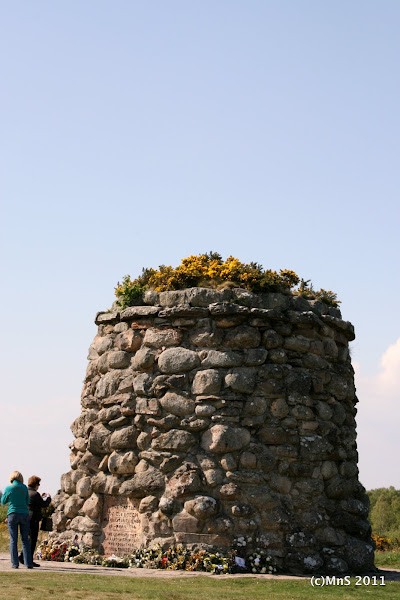
In memory of the clans..
It all culminated in Culloden. A weakened Jacobite army tired from its march back from London was crushed by the English.....
Memorial to the dead in the background
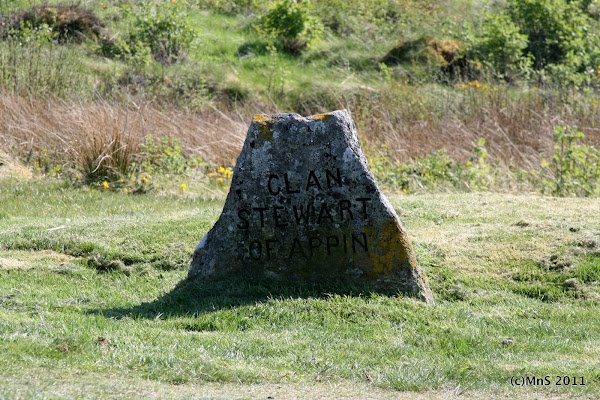
There are gravestones to every clan who fought here.  Over 1000 people died , most buried at the site of where we stand now.
Those who fell in battle..

In honour of their Clans.. 


Its a hot sunny day and its incredibly quiet. We walk up to the memorial erected in honour of the dead.

When we leave I feel an incredible sadness, I can't quiet define why..
The ghosts of Culloden hang around to this day!

Meena Venkataraman

LinkWithin

Related Posts Plugin for WordPress, Blogger...